
Forrester Research frequently advocates for their usability framework of useful, usable and ultimately desirable. The first two are table stakes and where designers spend most of their effort. When there is the luxury of time, which almost never happens, then one can strive for that elusive territory of desirability. If users find your design desirable you stand a greater chance of increasing conversion, garnering repeat visits and earning customer loyalty.
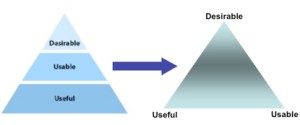
Surfing on slideshare.net led me to a presentation that took this concept even further. Essentially the author moved from a classic pyramid to a honeycomb design and added some critical elements to the model. These include, valuable, findabe, credible and accessible. I’m embarrassed to admit that I didn’t favorite the slide show and so I can’t reference the author or link to the actual presentation. My apologies to the person who created this really helpful PowerPoint. Here’s how it was illustrated in the presentation.
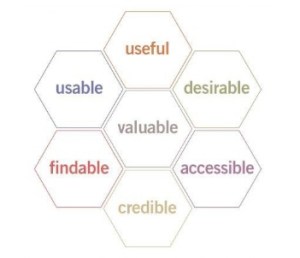
This concept advances the Forrester model by giving designers and customer experience professionals more dimensions to consider. When I provide direction to my staff and agency, I encourage them to include desirable as a goal from the very beginning, vs. settling for useful and usable and then tackling desirable as a “fast follower.” Oftentimes there’s no time for a fast follower, so getting in as much as possible is very important. Some of these additional attributes found in the honeycomb model above are clearly more structural or work to support reputation, not necessarily spawned from pure usability needs. But they are real aspects users will weigh as they navigate a web site or attempt to use functionality, so accounting and designing for these will be a plus.
This one slide has caused me expand my thinking and build out my checklist. If anyone knows who authored this, please chime in so I can give proper credit.


 expedientmeans.com
Leave a comment